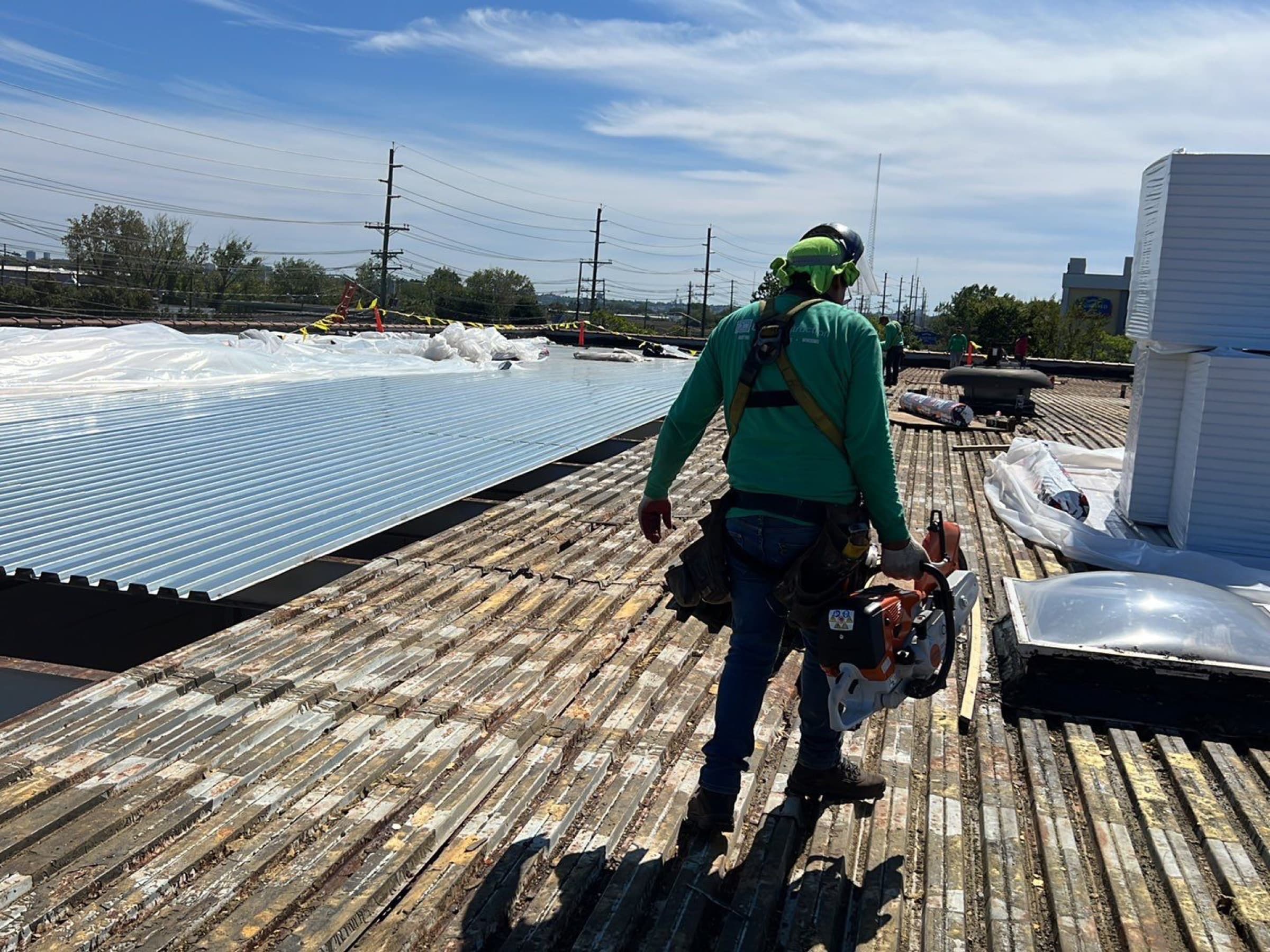
 Completed 2025
commercial
Commercial low-slope roof
- Location
- East Rutherford, NJ
- Building type
- Commercial building
- Scope
- Low-slope roof replacement, white single-ply membrane
- Status
- Completed 2025

Commercial roofing systems
PVC deserves a close look when roof exposure and building use shape the specification. Dior Construction helps property teams compare PVC, PVC KEE and other low-slope options without confusing material resistance with warranty coverage.
Request a BidPVC is a single-ply roofing membrane with a different chemistry from TPO. GAF's comparison describes its flexibility and resistance to chemicals, grease and fire as reasons to consider it. Restaurants, laboratories, industrial properties and healthcare facilities are among the building types where those characteristics can matter.
Start with what reaches the roof. Kitchen exhaust and industrial processes raise different questions from ordinary weather exposure. Give the design team information about equipment, cleaning products and known discharges. A product recommendation should address the actual conditions rather than assume that every chemical exposure is acceptable because the membrane is PVC.
The building's roof layout matters as well. GAF identifies PVC's flexibility as useful around complex roof contours. That does not eliminate the need for careful flashing and penetration details. For an owner reviewing a bid, the practical goal is a complete assembly matched to the property's use, with the exposure assumptions stated clearly enough to review before authorizing work.
GAF lists EverGuard PVC, PVC Fleece-Back, PVC KEE and PVC KEE Fleece-Back in its commercial catalogue. These names describe available product options. They do not establish which membrane is suitable for a particular roof or confirm a product selection for a Dior Construction project.
PVC KEE is a distinct option within that family. A comparison should identify the actual membrane and backing, the intended substrate and the assembly requirements. Avoid accepting a proposal that uses PVC and PVC KEE interchangeably without identifying which one is included. The distinction should remain clear in the scope, submittals and guarantee discussion.
GAF's material comparisons also identify limitations, including the need to separate PVC from asphaltic materials and the possibility of organic growth under some conditions. A credible selection addresses those limitations alongside flexibility and exposure resistance. Ask why the specified option fits your property and what preparation, separation and maintenance assumptions accompany it throughout the proposed roof assembly.
A membrane's ability to resist an exposure does not mean the manufacturer pays for damage caused by that exposure. GAF explicitly excludes chemical, grease, animal fat and jet fuel exposure from its PVC warranty coverage. This distinction matters for restaurants and industrial owners who may reasonably associate PVC with those environments.
Before selecting a system, identify the substances that may reach the roof and ask for the manufacturer's compatibility guidance. Separately, review the guarantee's covered causes and exclusions. These are related questions, but an answer about material performance cannot substitute for the written coverage terms.
For a board or owner, this is a useful procurement question: does the proposal explain both why PVC is being considered and what exposure-related obligations remain with the property? Keep equipment information and known discharge conditions with the project documents. An NDL label does not remove exclusions, and a contractor's certification does not expand coverage beyond the terms of the guarantee actually issued for the qualifying roof system.
PVC should not be placed directly against asphaltic roofing without the required separation. GAF identifies fleece-back options, including PVC KEE fleece-back, for suitable recover assemblies over asphalt. The backing is part of an assembly choice, not permission to cover any existing modified bitumen or built-up roof.
A recover evaluation needs moisture findings, a review of the existing materials and a code check. It also needs a manufacturer-approved design identifying the separation and attachment approach. Wet insulation and unsound material must be addressed. Our roof recover guide explains why the roof beneath the new membrane remains part of the decision.
If removal is necessary, the replacement scope should explain what will be exposed and rebuilt. If a recover is feasible, it should explain what remains and how PVC is kept compatible with that substrate. These details make alternatives easier to compare and help an owner avoid approving a generic overlay description that leaves the existing assembly out of view.
The membrane is one component of a PVC roof. Insulation, cover boards, attachment, drains, edges and equipment flashings belong in the same scope. GAF offers insulation and cover board options for commercial assemblies, but a product catalogue cannot determine the insulation or drainage design for your individual property.
Occupied buildings also require attention to installation conditions. GAF identifies a water-based adhesive option for PVC applications where odor matters. Ask how the proposed method addresses the building's air intakes, operating hours and access needs. An available low-odor option does not justify a promise that roofing work will have no effect on occupants.
Include facility staff in the review of equipment access and service routes. For multifamily communities, identify who handles resident notices and which entrances must remain available. These are planning questions to settle in the bid scope. They help connect material selection to the practical responsibilities of managing an occupied property during roofing work and after the project is complete.
Use the same questions when comparing PVC with TPO or EPDM: what condition is the existing roof in, what exposures matter, and what work is included beneath the membrane? A proposal that answers those questions gives an owner more useful information than a general claim about one material being suitable for every building.
Dior Construction is a GAF GoldElite Commercial Contractor, licensed, bonded and insured, and in business since 2014. GoldElite contractors can offer GAF Diamond Pledge NDL guarantees up to 25 years on qualifying systems. Additional requirements and exclusions apply. Review the guarantee explanation alongside the proposed assembly.
From Bergenfield, New Jersey, we serve all of New Jersey, Pennsylvania and Connecticut, and New York outside the five boroughs of New York City. Bring available roof records, known exposure concerns and your bid requirements to the conversation. Request a bid or roof assessment to evaluate PVC or PVC KEE for your building.
Questions / Answers
GAF identifies PVC resistance to grease and chemicals as useful in these settings. Actual exposure still needs compatibility review, and GAF excludes grease and related exposures from its PVC warranty coverage.
No. GAF lists them as separate product options. The proposal should identify the membrane, backing and complete assembly being offered.
PVC requires appropriate separation from asphaltic materials. A suitable fleece-back recover assembly must follow manufacturer requirements and account for existing moisture and condition.
Not automatically. GAF excludes chemical, grease, animal fat and jet fuel exposure from its PVC warranty coverage. Read the actual guarantee and exposure guidance before approving the system.
Yes. Installation planning should address access, air intakes and odor concerns. GAF identifies a water-based PVC adhesive option, subject to the proposed assembly requirements.
It should identify the membrane, substrate preparation, insulation, cover board, attachment, flashing details and proposed guarantee, along with the assumptions about existing roof condition and exposure.
Fieldwork / Related projects
Completed 2025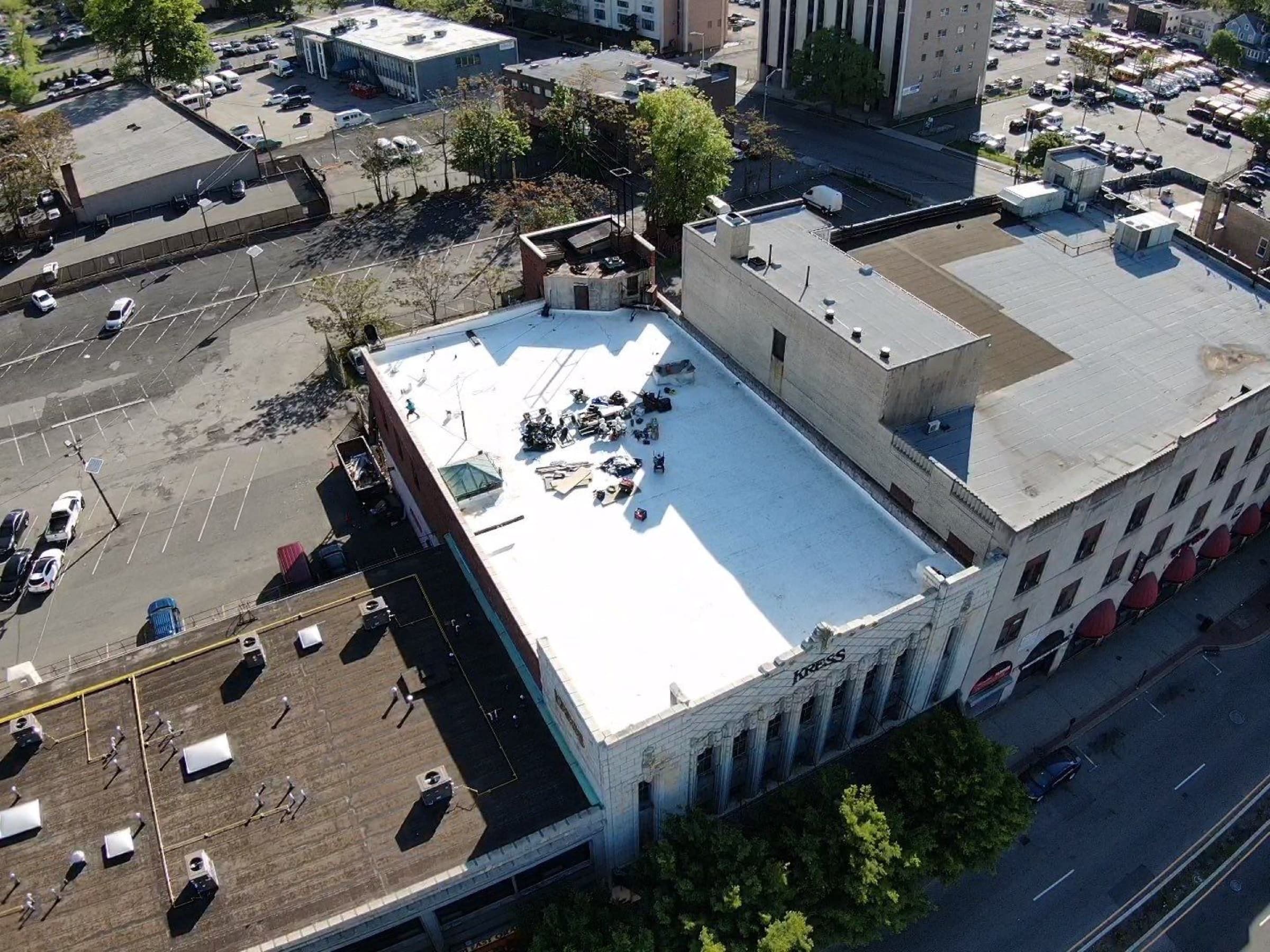 Completed 2021
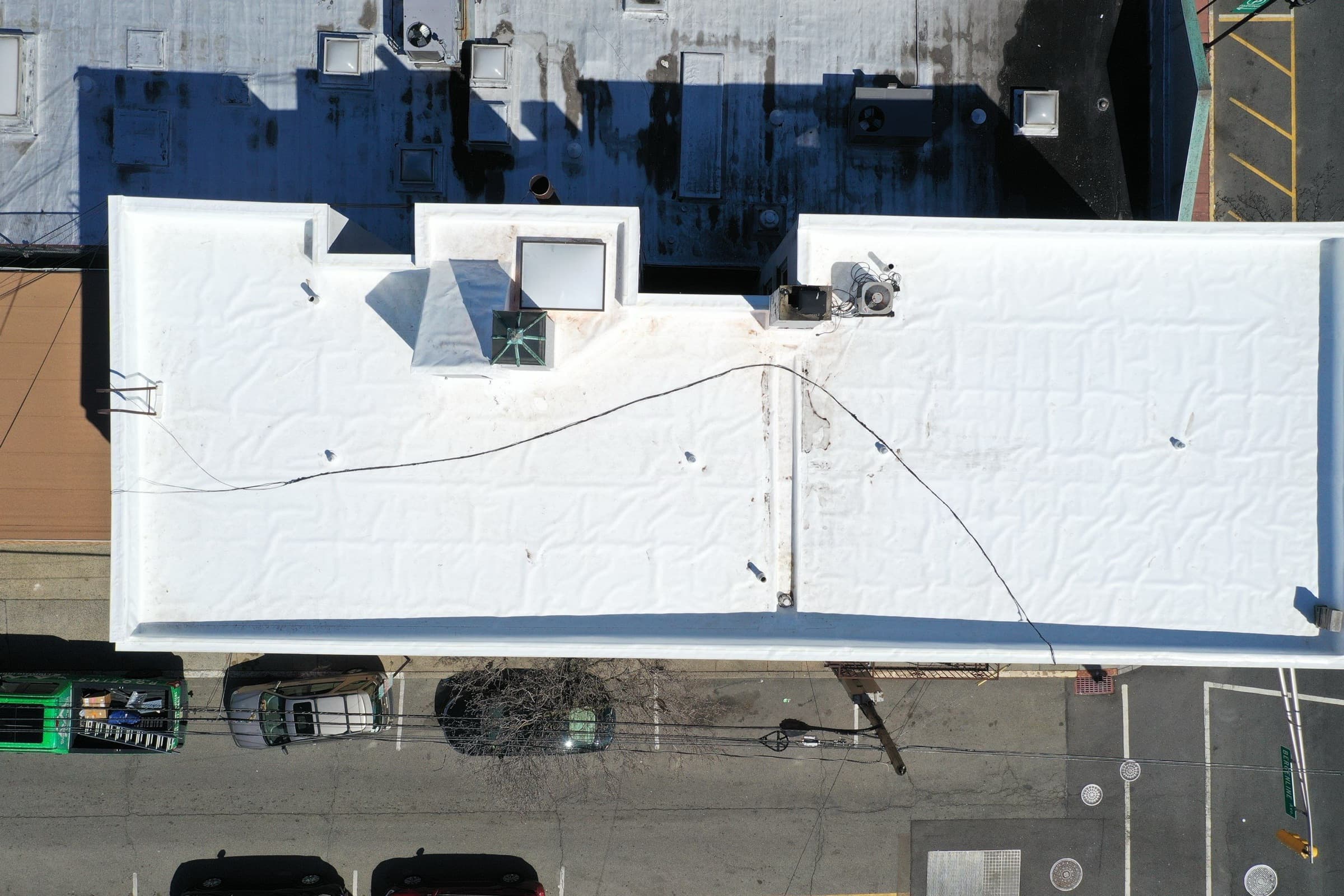 Completed 2021
Next step / Start a conversation
Tell us about your building, the work you are considering and your priorities. A clear scope starts here.
For an active leak, call our team.
(201) 472-5462