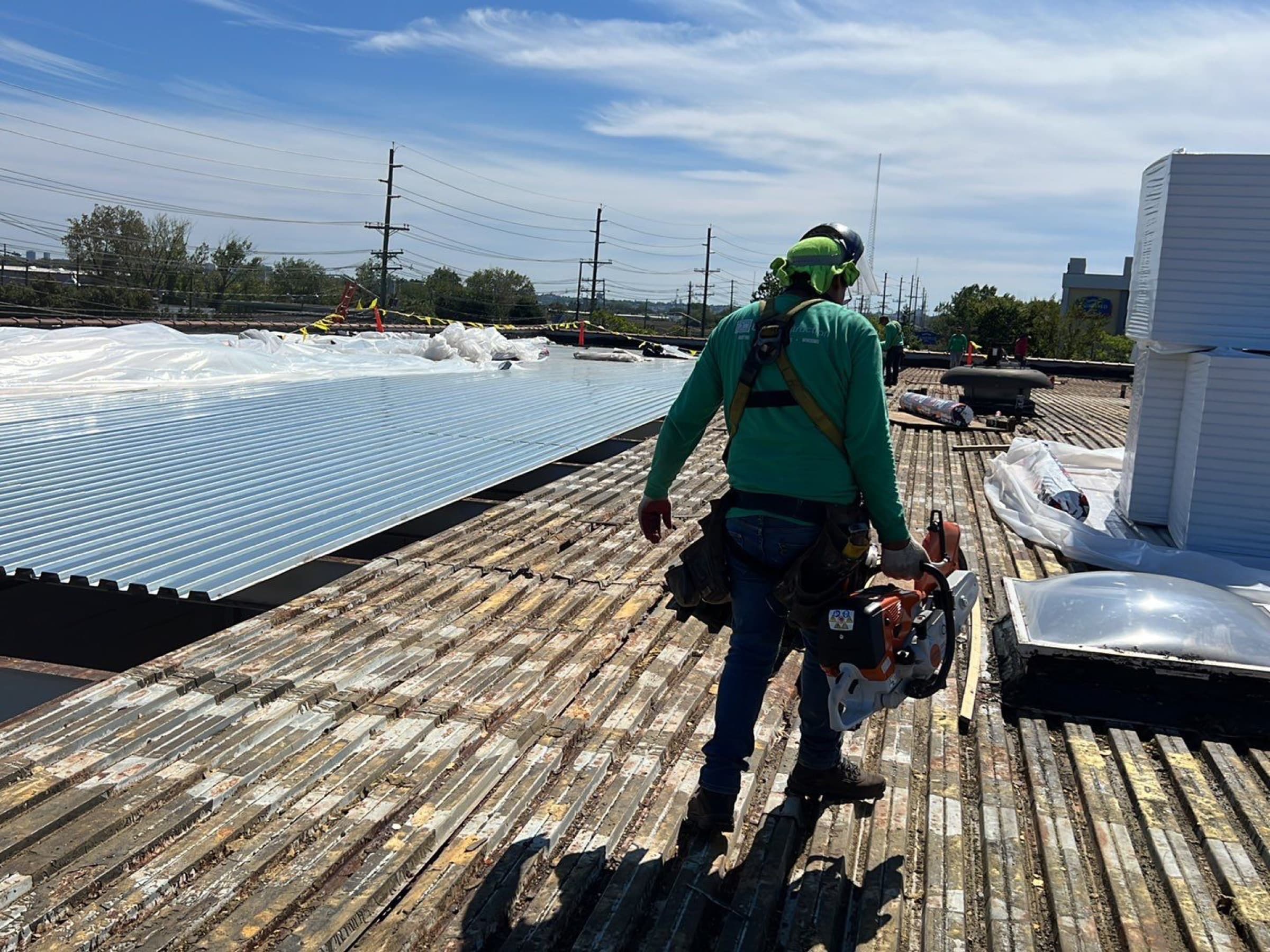
 Completed 2025
commercial
Commercial low-slope roof
- Location
- East Rutherford, NJ
- Building type
- Commercial building
- Scope
- Low-slope roof replacement, white single-ply membrane
- Status
- Completed 2025

Compare commercial roof systems
The right comparison starts with the building and the roof beneath the membrane. TPO, PVC and EPDM offer different material characteristics, seam methods and exposure considerations for commercial owners.
Request a BidA membrane comparison is useful when it connects to a real building decision. Are you replacing an assembly with widespread moisture, repairing a serviceable roof or evaluating a recover? Does kitchen exhaust reach the roof? Are odor concerns and tenant access central to the project? These questions narrow the specification before a product is chosen.
TPO and PVC are thermoplastic single-ply membranes with hot-air-welded seams. EPDM is thermoset rubber, typically joined with adhesives or tapes. Each still depends on insulation, attachment, flashing and the condition of the supporting assembly. The membrane name cannot describe those components or establish that a roof is suitable for an overlay.
For a property manager, the first comparison should be the same scope across the alternatives. Ask what stays, what is removed and how moisture findings will be addressed. Only then compare membrane characteristics. A proposal for a complete replacement and one for a recover are different projects even if they name the same membrane.
TPO stands for thermoplastic polyolefin. GAF lists smooth, fleece-back and self-adhered options within its EverGuard TPO range, alongside EverGuard Extreme products with an enhanced weathering package. White and colored membranes are available. This range gives specifiers several ways to address a low-slope roof, subject to the selected assembly requirements.
TPO deserves consideration for offices, warehouses, retail properties, schools and other commercial buildings evaluating single-ply replacement. Certain fleece-back assemblies can also be considered for recover work. Self-adhered options are relevant where solvent odor is a concern. These are reasons to examine an option, not a guarantee that it fits every substrate or operating condition.
Ask a TPO bidder to identify the actual membrane and attachment method. Include insulation and cover boards in the review, particularly if the project involves changes beneath the sheet. Our commercial TPO guide explains how those components fit together and why a product family name alone leaves much of the scope unanswered.
PVC is a different single-ply chemistry. GAF describes flexibility and resistance to chemicals, grease and fire among its characteristics. That makes PVC worth evaluating for restaurants, laboratories and industrial properties, as well as roofs with complex contours. PVC KEE is a separate product option that should be clearly identified in the proposal.
Material resistance does not establish warranty protection. GAF excludes chemical, grease, animal fat and jet fuel exposure from its PVC warranty coverage. An owner needs both an exposure compatibility review and a separate reading of the guarantee. Neither the PVC name nor an NDL label removes those exclusions.
PVC also needs appropriate separation from asphaltic materials. Fleece-back recover products can be part of a suitable design, but direct placement over an arbitrary asphalt roof is not an acceptable assumption. The PVC and PVC KEE page covers these questions in more detail, including what to ask when an existing modified bitumen or built-up roof is involved.
EPDM is thermoset rubber, commonly black, with seams joined using adhesives or tapes. GAF's comparison notes that those seams may require ongoing maintenance. It also describes black EPDM's heat absorption and continued use in colder, heating-dominated climates. These points deserve consideration alongside the condition of a roof that is already in service.
An owner does not need to replace sound EPDM simply because a thermoplastic alternative exists. Ask whether a repair can address the identified problem and what the moisture investigation shows. When replacement is appropriate, compare the full assemblies and operating requirements instead of assuming that a material change will correct unrelated drainage or substrate issues.
GAF does not make an EPDM membrane. Dior Construction services EPDM, but its GAF GoldElite credential should not be read as a GAF product or guarantee claim for EPDM. Visit the EPDM services page for repair, coating, replacement and conversion questions to include in an assessment.
Recover feasibility depends on the existing roof and the proposed approved assembly, whichever membrane you are considering. A moisture survey, condition assessment and code review belong before a blanket promise to install over the existing system. Wet insulation and deteriorated material need to be addressed rather than left out of the comparison.
Guarantees also require an independent review. Dior Construction is a GAF GoldElite Commercial Contractor, which can offer GAF Diamond Pledge NDL guarantees up to 25 years on qualifying systems. Additional requirements apply. That applies to eligible GAF assemblies, not to every membrane compared here.
For coatings, GAF uses separate CoatingsPro and CoatingsPro+ certifications. Commercial GoldElite status alone does not establish coatings guarantee eligibility. Ask that each option name its proposed guarantee and provider. Comparing actual written coverage is more informative than treating every manufacturer warranty, workmanship promise and restoration offer as if each provides the same protection.
Request alternatives that use consistent assumptions about demolition, moisture removal, insulation and roof details. Ask bidders to explain material differences in relation to your property. Where an option changes attachment or preparation, the proposal should make that change visible. A board can then see what it is approving beyond a different membrane name.
Include operational requirements with the bid package: building access, air intakes, delivery routes and equipment service needs. Existing roof records and leak history help frame the assessment. For a portfolio, keep the information tied to the specific building and roof area so the discussion does not drift into a generic system preference.
Dior Construction has been in business since 2014 and is licensed, bonded and insured. From Bergenfield, New Jersey, we serve all of New Jersey, Pennsylvania and Connecticut, plus New York outside the five boroughs of New York City. Request a bid or roof assessment for a comparison grounded in your building's existing conditions.
Questions / Answers
TPO and PVC are thermoplastic membranes with hot-air-welded seams. EPDM is thermoset rubber with adhesive or taped seams. Exposure, compatibility and assembly requirements also differ.
PVC deserves evaluation because of its grease and chemical resistance. Actual exposure compatibility needs review, and GAF excludes those exposures from its PVC warranty coverage.
It can. GAF identifies continued EPDM use in heating-dominated climates. Existing condition and the full assembly should guide the decision for your building.
Potentially, through a suitable manufacturer-approved recover design. Existing moisture, material condition, compatibility and applicable code must be evaluated first.
No. GAF offers TPO, PVC and PVC KEE, but does not make an EPDM membrane. EPDM service should not be described as installation of a GAF EPDM product.
Compare consistent scopes for removal, moisture work, insulation, attachment and details. Then compare the membrane characteristics and the actual guarantee proposed for each eligible assembly.
Fieldwork / Related projects
Completed 2025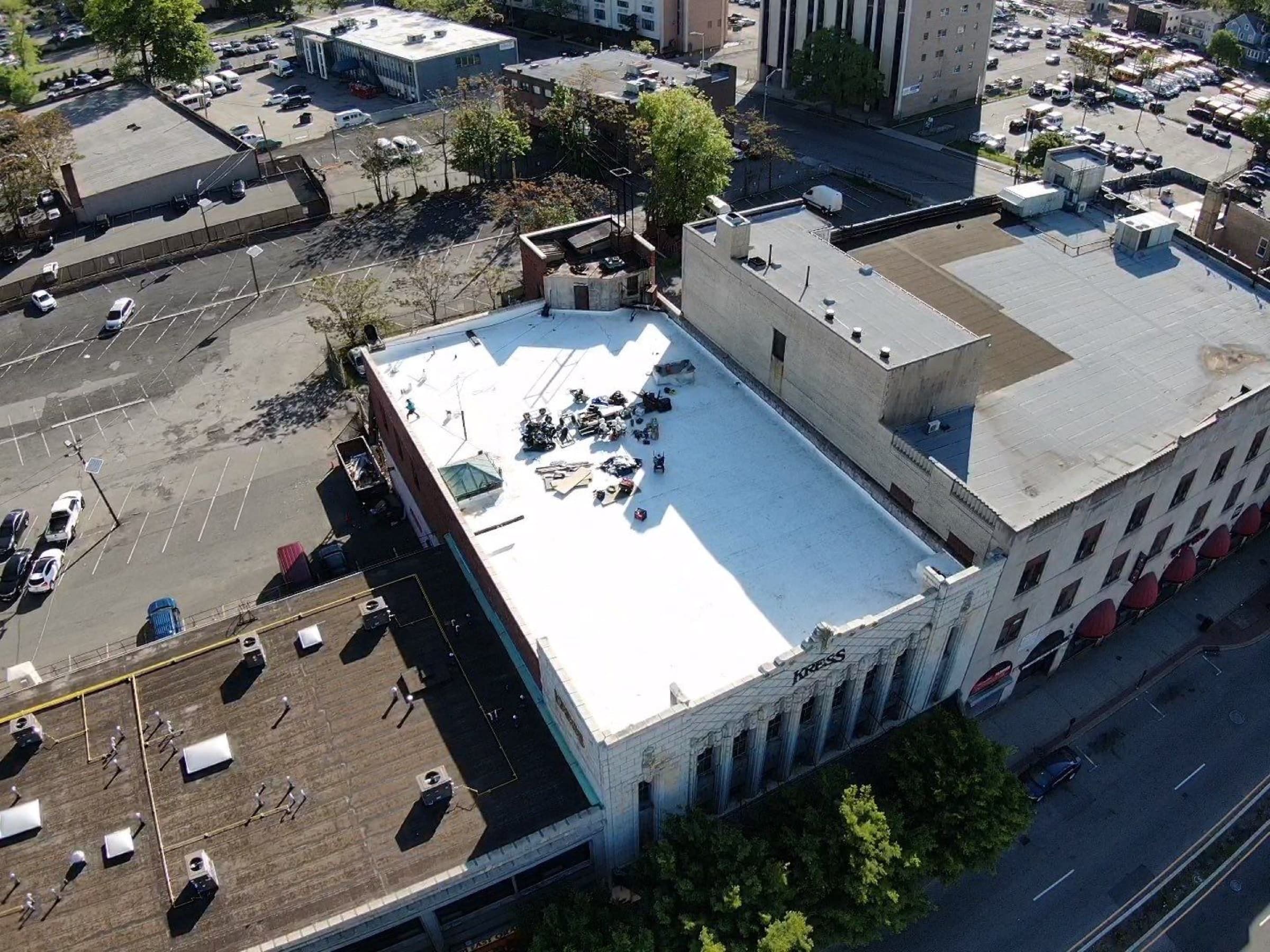 Completed 2021
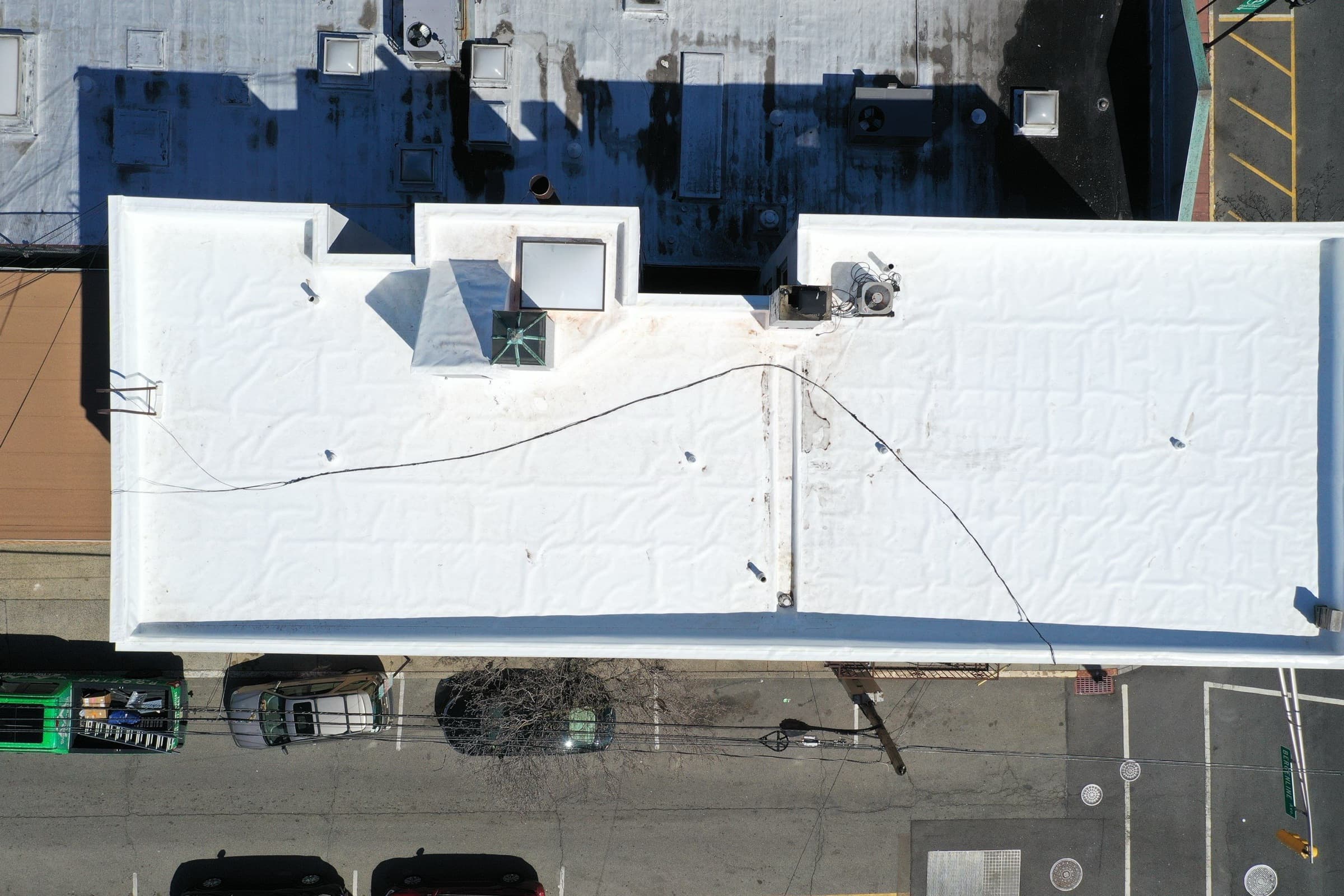 Completed 2021
Next step / Start a conversation
Tell us about your building, the work you are considering and your priorities. A clear scope starts here.
For an active leak, call our team.
(201) 472-5462